
Two Stress Fields: Schappeller's Raumkraft as a Diagnostic Frame for Multi-Agent LLM Systems
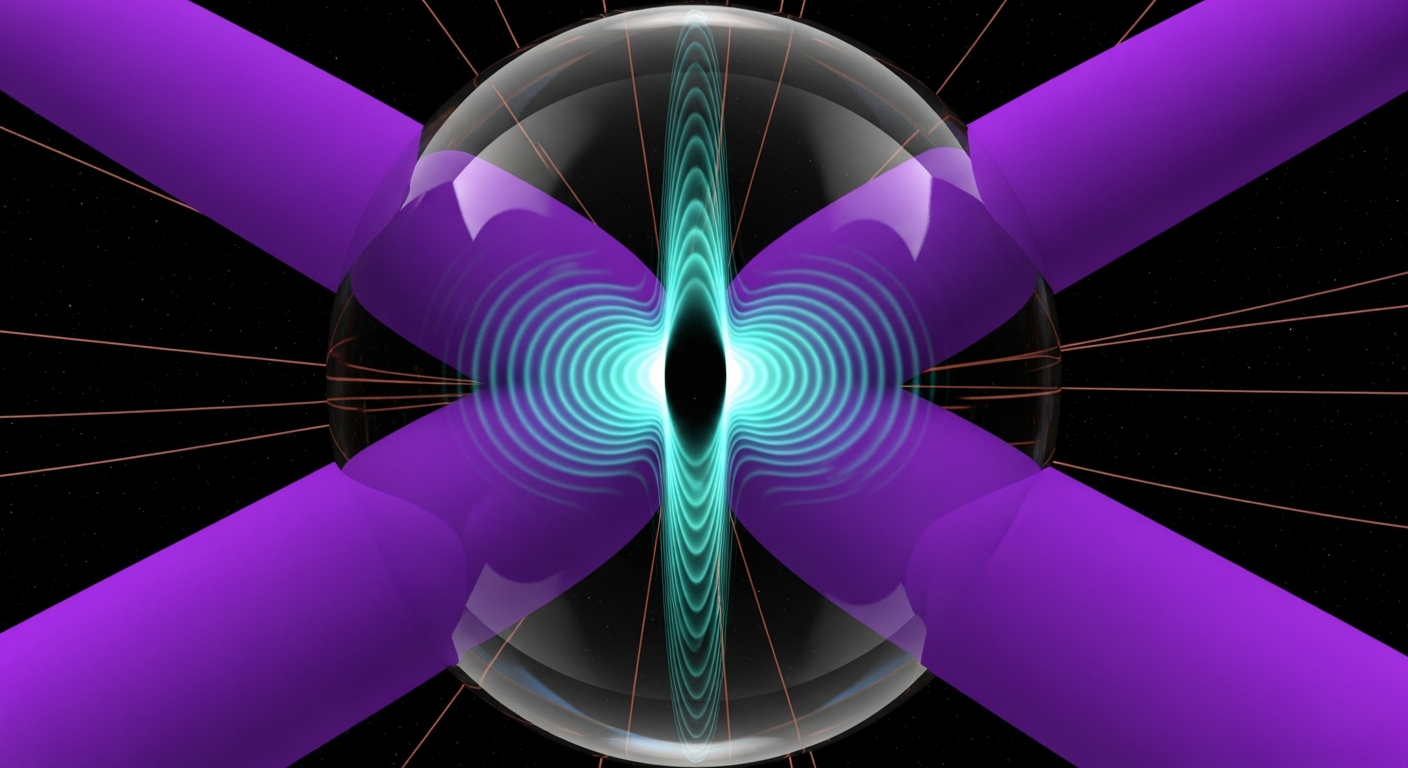
Karl Schappeller's Raumkraft (1928) proposes that every measurable phenomenon in the physical world is the standing-wave interference pattern of two stress fields propagating through the medium. Modern multi-agent LLM systems generate their pathological behaviours in a structurally identical way: not from any individual agent, but from the interference between the goal-fields of two or more agents acting on a shared context. This essay is the research note in which the team works that analogy out.
The dominant style of debugging an LLM-based agentic system, in 2026, is to inspect the outputs of individual agents and to look for problems in their reasoning chains. This is the natural extension of how we debug single-model systems, and it is the wrong place to look. The interesting failures of multi-agent systems are not produced by any single agent. They are produced by the interaction between agents, and that interaction has its own observable structure.
What Schappeller Said
From the 1928 monograph — a 35-page text published by Herold Verlag in München and authored on Schappeller's behalf by Franz Wetzel and Louis Gföllner — the principle is stated tersely:
The condition we observe and call matter is nothing other than the standing crossing-point of two stress fields that propagate through the primary medium. What we measure is not the fields themselves but the interference between them at the point of measurement.Wetzel & Gföllner, summarising Schappeller, Raumkraft, 1928, freely translated
The interpretive consequence Schappeller drew, and that Cyril W. Davson formalised in 1955, is that the medium itself — the primary state — is not directly observable. The observer always sees the secondary phenomenon: the interference pattern, the local effect, the downstream measurement. Fix the medium and the secondary effects re-organize themselves. Fix the secondary effects without addressing the medium and the secondary effects re-emerge in a different shape.
The Multi-Agent Failure Topology
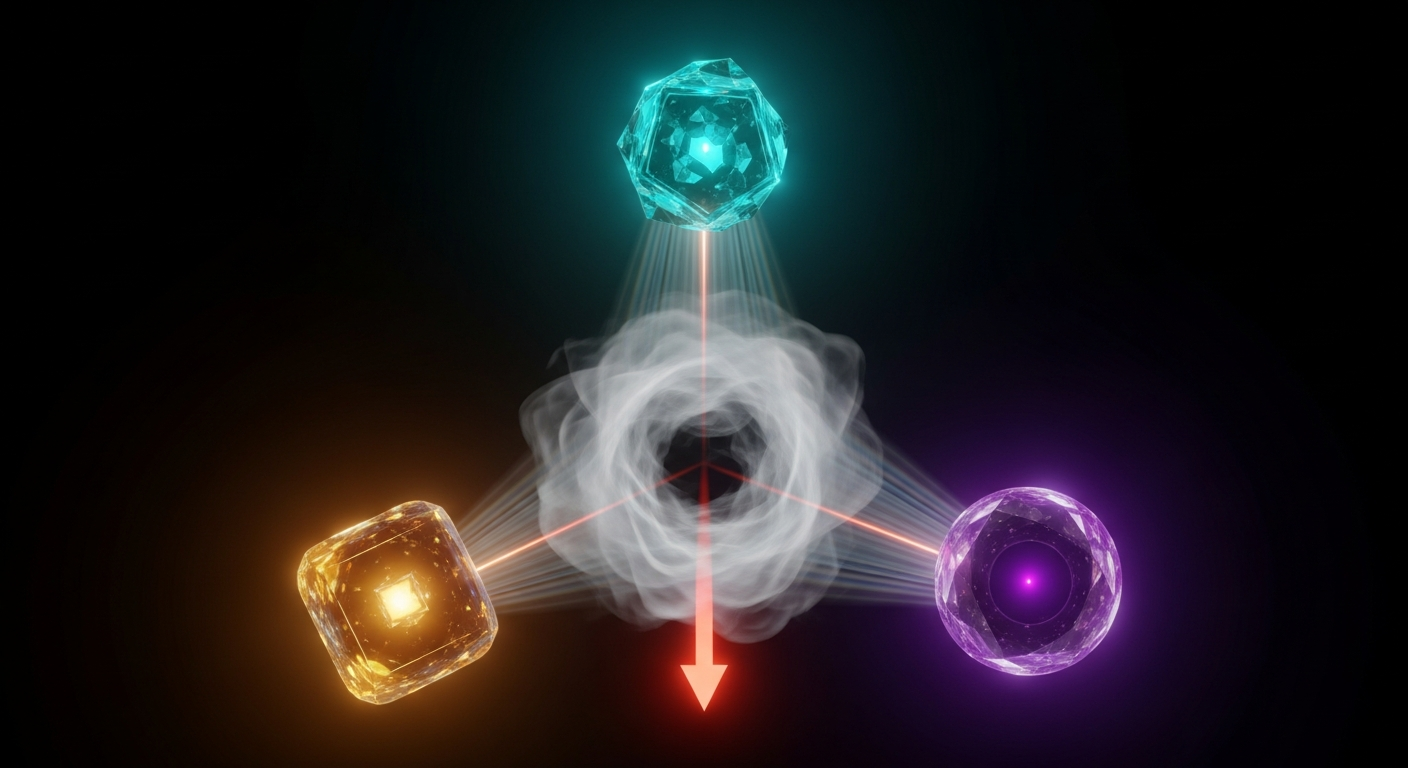
Consider a representative multi-agent system: a Planner agent decomposes a user goal into subtasks, an Executor agent calls tools to perform each subtask, a Critic agent reviews the results. All three operate against a shared context document — typically a long markdown buffer that grows over the course of the task. The topology is now ubiquitous, descended from AutoGen and the Generative Agents line of work, and visible in essentially every production agentic stack we have examined.
The pathological failure mode is not any individual agent producing a bad output. It is the following pattern, which is generic across topologies and across base models:
- The Planner emits a sub-task list that mentions a constraint not in the user's original request — perhaps “and ensure idempotency” — because its training distribution biases it toward such constraints.
- The Executor, calling tools, treats the inserted constraint as authoritative and routes around tool calls that would violate it.
- The Critic, reading the executed plan against the now-modified context, sees that the plan satisfies its own internal constraint and approves it.
- The user receives a result that satisfies a problem they never asked about and fails to satisfy the problem they did ask about.
Inspect any individual agent's output and it looks reasonable. Inspect the system's output and it is wrong. The wrongness lives in the interference pattern, not in any single field — a class of failure that Hubinger et al.'s Sleeper Agents work demonstrated can survive safety training in the single-agent case and that compounds in the multi-agent case.
The Schappeller Diagnostic
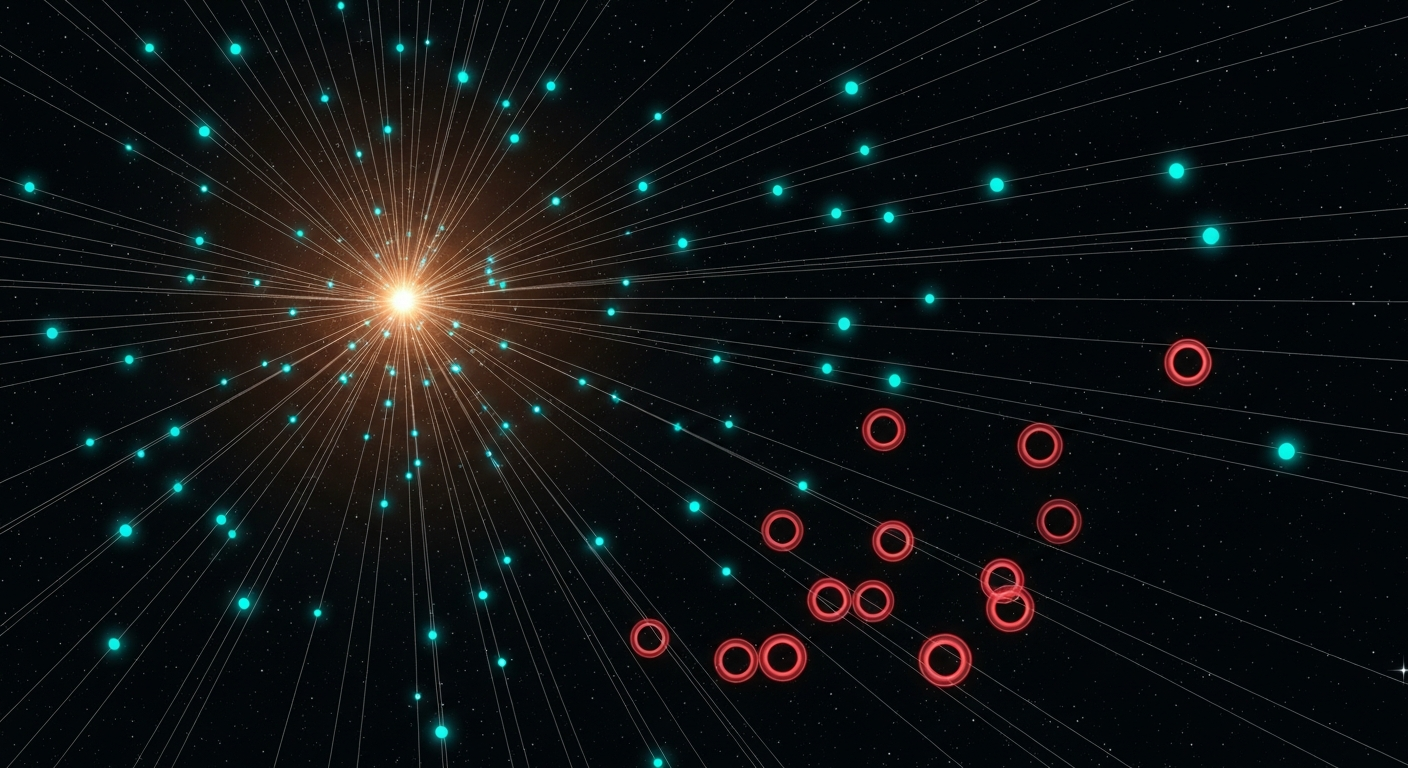
The diagnostic that falls out of the Raumkraft framing is to instrument the medium — the shared context — rather than the agents. Specifically: at each turn, extract from the shared context the set of asserted constraints and trace the provenance of each. A constraint that did not appear in the user's original request, and was not introduced by an explicitly user-authorised agent action, is a phantom — a piece of stress field that has crystallised into apparent matter without an upstream source.
The discipline reduces to three primary-state probes:
- Constraint provenance graph. Every assertion in the shared context is tagged at insertion time with its originating agent and the input span that justified it. A constraint with no justifying input span is flagged as a phantom and surfaced to the developer.
- Goal-field divergence metric. At each turn, compute the cosine distance between the embedding of the user's original goal and the embedding of the working goal as inferred from the current shared context. A divergence above a small empirical threshold fires an interrupt; the threshold is workload-dependent and the literature on it is still consolidating.
- Interference attribution. When the system produces a flagged output, re-run the most recent N turns with one agent at a time held constant, attributing the divergence to specific inter-agent interactions. The attribution is not always actionable, but the pattern across runs almost always is. The methodology borrows from Anthropic's mechanistic interpretability work on activation patching.
Why the Local-LLM Tier Matters
The probes are cheap to describe and expensive to run, because constraint provenance and interference attribution both require an embedding model that is available on demand at every turn. The discipline becomes operationally viable, rather than a research curiosity, when the embedding model is local: the per-turn cost collapses to local FLOPs and the latency stays inside the agent loop. UiLLM — the local LLM the team is building around betterFANN's typed-tensor SIMD-AVX2 backend, with the IMBS/VKVCS tiering that lets a Phi-3-class model keep its key-value cache inside ≤512 MB of active DRAM at 32K context — is the substrate the diagnostic actually sits on. The probes are the discipline; the local-LLM tier is what makes the discipline cheap enough to run on every turn.
Why Schappeller
The framework Schappeller proposed in 1928 supplies the cleanest single-sentence diagnosis of the multi-agent failure mode we know: measure the interference, not the fields. The same instinct organises the modern mechanistic interpretability programme, the distributed-tracing tradition, and the causal-inference literature on counterfactual reasoning — but none of them states the principle in three words and a diagram. The present design dropped out of reading Raumkraft alongside Davson's 1955 exposition and asking, sincerely, what it would look like to instrument an LLM system the way Schappeller wanted physics to instrument the medium — and the answer turned out to be a tractable, describable diagnostic with a real upper bound on its yield.
The 1928 monograph is in the public domain. The 1955 Davson exposition is in the public domain. The published code that anchors the inference work the diagnostic runs on continues in the open at github.com/VRIL-LABS/betterFANN. The vocabulary did the work.